The FLAG versus the norovirus

Stomach flu bugsI got really sick the other day with the stomach flu, which scientists call norovirus. While recovering, I decided to look into the background of this nasty infectious agent. Boy, was I surprised at what I found.

I’m not going to give you a lecture on the lifestyle and habits of this little nemesis. Nor do I want to bore you with discussions of the nefarious mechanisms it uses to take over the cells of your body to make them into robotic factories for the mass production of a zillion copies of its bad little self.

What I want to talk about is the FLAG.

Huh? You say.

You see, while I was wandering the internet seeking some understanding of the virus that had made me spend two feverish days resisting the urge to upchuck, I looked at a bunch of scientific reports coming from laboratories all over the world and eventually — I ran into myself.

Flagging the fluOr rather, into my scientific work.

It turns out that some prominent researchers at the Imperial College in London have finally succeeded in cultivating the norovirus after many labs had failed for decades, making it one of the most un-studied of commonly occurring pathogens of mankind. Fortunately, as of their report published just a few months ago, they have made the necessary breakthrough of routinely culturing the virus and beginning to study its lifestyle and habits. The conquest of the norovirus will surely follow.

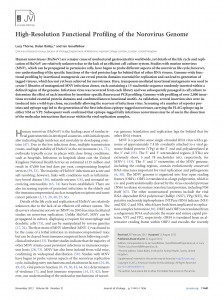
All this would have left me only slightly amused except for the fact that right on page one they credited part of their success to using a molecular handle I invented, which they attached to the virus. A handle called the FLAG epitope, in scientific jargon. Click the image above for a detailed look.

FLAG version oneI invented the FLAG epitope 24 years ago in my days as a youthful scientist at Immunex Corporation in Seattle. That’s a unique feeling, to be reading about an evil virus from which you yourself are suffering, and find out that your weapon is being used to combat it. Wow. I got over feeling sickly right away.

Perhaps none of this would be worth more than a thin smile in passing, given that my research career was long ago shattered when I was fired by a jealous boss. But it seems like the wheel of Karma is turning here. Despite my long years out in the cold, the world of medical research has revolved and cast a warming light on my old bones. It feels good.

It’s not the first time I have seen the FLAG reported in action against a disease or medical condition. In fact, over the years it has been mentioned so many times that I’ve lost count. So it seems that although my scientific career was terminated wrongfully, nevertheless it continues to cast a long shadow. Who knows? Maybe someday someone, somewhere, will recognize the importance of what I once created and give me a pat on the back.

Or maybe someday someone will look at my record and think that I ought to be given a laboratory and a few chemicals to see if I can create something else that will last as long and do as much as the FLAG has done. I know I am up for the task. I have been for decades, but life has its ironies.

Well, I’ve written a rather bittersweet piece here, haven’t I? I always get that way when I look back over my accomplishments and the premature end of my days in the lab. It’s a shame really. I know I had it in me to make another ten or twenty discoveries on the order of the FLAG. I still do.

But it’s not all gloom and doom, is it? Maybe someday soon, someone will pick up the mantle of the FLAG and conquer norovirus or some other virus before it strikes me, or anyone else, for that matter. On that day the weapon I devised so long ago will come around to benefit me personally as well as everybody else.

And that’s all right.

Posted in Real Science | Tagged , , , | Comments Off on The FLAG versus the norovirus

Even more dinosaur skin

RattailThis is the last I’ll say on this subject for a while, okay? In my previous two entries, I explained how dinosaurs might have been less scaly and more feathery or furry than the experts used to think. In case you’re not convinced yet, let’s have a deeper look at what modern mammals can tell us.

You probably recognize the first image. It’s a closeup of the tail of a pet rat. Spare me the ‘Eeewws,’ okay? Look at the details. Those are scales you see, arranged in rows across the tail, and lo and behold, right there interspersed among them are a whole bunch of hairs. Click the image for a better look. So I ask you, is a rat’s tail scaly or hairy? It would be dumb to choose either answer because clearly the answer is: BOTH!

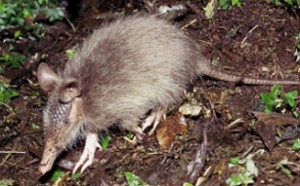
Two miceAnd here are a couple more examples. Two more mammalian creatures, a marsupial mouse on the left and a regular mouse on the right. Different sizes and shapes of scales, but hair, hair, everywhere.

For some reason it has been hard for paleo-artists to decide whether to portray dinosaurs as scaly, hairy, feathery or — whatever. That’s why I think it’s worth taking the time to point out that the old-school choice, scaly, just has to be out of date. Given that every branch of the dinosaur family tree is now known to have members of the fuzzy or feathered variety, it simply is no longer acceptable to portray them in the old, scaly form. As I stressed last time, today’s chickens have developed an incredible diversity in their feather coverings over a short period of chicken breeding.

KilladilloSo let’s look and see what else mammals are able to show us. Here’s a scaly fellow. Oops! Road kill! Anyway, you can see that armadillos are covered from head to tail with heavy scales and have only a bit of fuzz on their belly, legs, and chinnie chin chins. Right?

Wrong!

The picture below is a photo of the rare hairy armadillo of the Amazon rain forests, a close cousin of the road-kill-adillo above. Except for her head and tail, she has dispensed with the scaly coating and opted for chic, luxurious fur. Can you blame her? How cute is that?

Cute-adilloSo, I think I’ve probably belabored this subject enough for now. Clearly, living animals show us that skin coverings can take on an incredible range of patterns, coverages, and um, er, coolness, and do so in the evolutionary blinking of an eye. They show us that fur and scales, or feathers and scales, can coexist and even intersperse. Maybe some of those scaly dino skins I showed in the previous entries once had tufts of fur or protofeathers interspersed, but such fine features were lost in the process of fossilization or excavation. Who knows what future fossils will tell us?

Dinosaur artists take note. The look and feel of dinosaur skin has come into a new age of fashion and taste. Don’t be left behind. Brush up on your feather and fur painting skills. They will be needed.

And dinosaur fans. Prepare to be amazed at the new look of the old beasties.

Posted in Real Science | Tagged | Comments Off on Even more dinosaur skin

More Dinosaur Skin

CentrosaurSkinWriting dinosaur fiction presents me with the problem of accurately describing the beasts. But appearances are only skin deep, and so the exact nature of dinosaur skin coverings is always on my mind. Have I written it right? Or will some dinosaur digger come along and say I’ve gotten it all wrong?

That’s why I continue to look at all the evidence I can find, whether on extinct dinosaurs or on their living relatives, the birds. Today I want to take a closer look at those fine feathered representatives of the dinosaurian lineage, the chickens, and see what they can tell us.

Above you see a fossilized piece of skin from a giant horn-faced dinosaur called a Centrosaurus. This fossil, collected by the American Museum of Natural History, shows the typical scaly hide often associated with the biggest and baddest of these beasts. Scientists identify these structures as scales similar to those seen on modern snakes, lizards, and birds. One scale in the upper right area is quite a bit larger than the others. Fine so far.

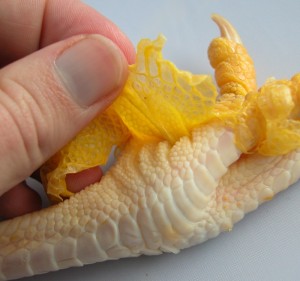
Dino dim sumSo let’s take a look at some bird scales. In this admittedly rather gross picture, a Chinese restaurant worker is peeling the outer skin layer from a chicken foot, which will soon grace a dim sum platter. You can immediately see the similarity of the scales on this delicacy with the fossilized scales on the Centrosaurus. Large scales, smaller scales, and even some tiny little ones. I imagine Centrosaurus feet would be considered an especially prized variety of dim sum. One foot feeds twenty people!

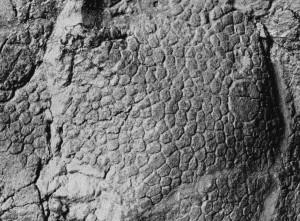
Ducky skinAnyway, here’s another look at dinosaur skin. This is a closeup of a fine-scaled form scientists call pebbles, found on a fossilized duckbilled dinosaur. It looks a lot like the smallest scales on that chicken foot.

Now, here’s the most interesting question of all. Just how much of a dinosaur’s hide was covered in what sort of scale? Large? Small? Pebbly? What?

And let’s not forget the recent fossil discoveries that have shown that most lineages of dinosaurs, meat eaters and plant eaters alike, had more than just scales on them. There were feathers and a sort of fur that fossil diggers like to call protofeathers or dino-fuzz. So, which parts of dinosaurs sported scaly coats, and which were equipped with sleek fur and feathers? No one knows for sure, but consider the following:

Nice feet!This is a picture of a breed of chicken called a Sultan. In addition to its turban of feathers where a naked-skinned comb ought to be, it also has swapped out some of those scales we were just looking at on its feet, for a bunch of feathers! Pretty incredible, isn’t it? And, given that breeders have only been collecting interesting mutant chickens like this for a couple of centuries, it’s mind-boggling to think of the number of variations that might have arisen in millions of years of dinosaur evolution. Every possible variation of scales and pebbles and fur and feathers must have existed on every possible part of the dinosaurian anatomy. Maybe even up-the-ying-yang and out the wahzoo!

So, how does this help me decide how to portray dinosaurs in my books? On the one hand, it makes knowing the absolute truth a matter of constant frustration. Even though the fossil record has provided dozens of examples of skin coverings, it is nevertheless a rare dinosaur for which the entire body has been preserved in enough detail to give a complete answer. So I am left guessing.

On the other hand, with so many variations of feathers and scales among chickens and other birds to go with, it’s clear that an author of dinosaur fiction has a “free range” of possibilities to choose from. And that’s what I do. My horn-faced dinosaur in “Saving Pachyrhinosaurus” is fully covered in woolly dino-fuzz, while the three-horned Triceratops in “Dinosaur Wars: Counterattack,” is quite scaly, with just a bit of fuzz here and there for effect.

Until someone can provide me with completely definitive fossil evidence, I’ll keep the variations coming.

Posted in Real Science | Tagged , , , , , , | 3 Comments

Dinosaur skin — scaly or furry?

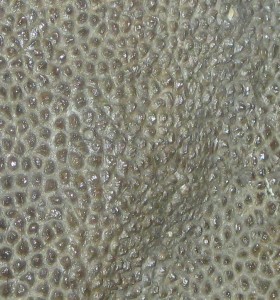
Scaly or what?Look at this cool closeup photo of a dinosaur’s skin. Scaly, scaly, scaly. Oops. Wait a minute. Something’s wrong here. That’s not dinosaur skin. I’ll tell you what it is in a bit. But first, let’s back up for a history lesson.

Ever since the first paintings and sculptures of dinosaurs were created back in the 1800s, artists have been portraying the big beasts as essentially overgrown lizards. That wasn’t terribly inaccurate based on the data available at the time.

Scales!For instance, back in 1925, Charles Sternberg published a photograph of some fossilized skin he found while digging up the bones of the horn-faced dinosaur, Chasmosaurus. You’ve got to admit, the evidence for scaly-hidedness was pretty strong for old Chasmo. Click the image at right for a bigger view.

However, with little more evidence than that piece and just a few others, paleo-artists everywhere began to make paintings and statues of big scaly lizard beasts, even when all they had to work from was a bunch of bare bones. It turns out they were probably overdoing a good thing. Well, a reasonable thing, anyway.

As time went on, more fossils were discovered. And some of those did not exactly jibe with the big scaly lizard theory of dinosaurs. Fossils of feathered dinosaurs were found. Fossils of fuzzy and furry dinosaurs were found. Fossils of dinosaurs with quills were found.

Nowadays, even though there are quite a few good examples of dinosaurs of the not-so-scaly varieties, the overwhelming number of fossils still remain bones, not skin. So many a dinosaur has yet to be given a truly authenticated outer covering.

Some of us dinosaurologists, like me for instance, have gotten out ahead of the game and put some fur or feathers on a whole bunch of the critters without much hard fossil evidence supporting us. However, I’ll stand by my work, because there is some non-fossilized evidence to be seen in the present-day world.

No ifs ands orSo, what sort of critter had that scaly hide in the first image? Here’s your answer: the Indian rhinoceros (okay a picture of the south end of one that’s going north).

So, let’s see now. Mammals are scaly. They don’t have fur.

Well, of course we know that most of them do have fur, and lots of it. So we’ve got a nice counter-example here to compare with dinosaurs.

Suppose a far-future paleontologist dug up a fossil of this rhinoceros with some skin attached, like Sternberg did so long ago with Chasmo. I suppose he would speculate that all mammals were scaly. But he would be wrong.

Hairy and hornyAnd now here’s one final twist.

Look at this critter on the left. It’s a Sumatran rhinoceros, a close relative of the Indian rhinoceros and a not-too-distant relative of the wooly rhinoceros.

He’s not so scaly. In fact, he’s rather hairy (and just a little gooey, being fresh from his mud bath).

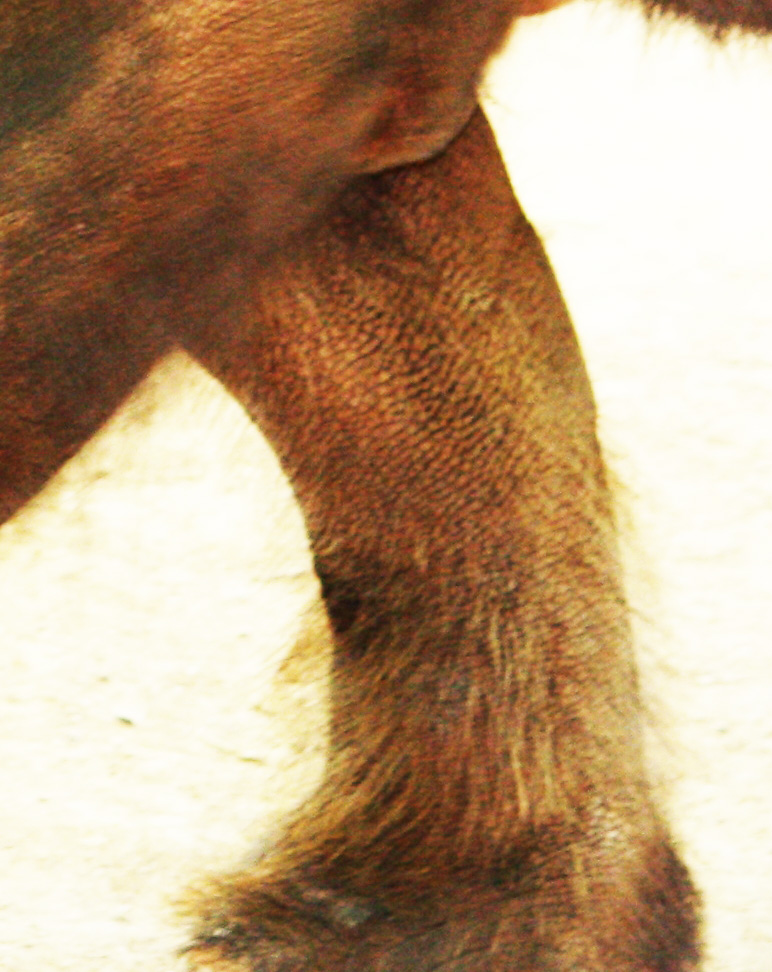
And have a look at the picture below. A closeup of this guy’s leg shows us the ultimate in rhinoceros skin fashions: both scales and hair in the same place!

Click the image for a closer look. Will wonders never cease?

So, pity the poor paleo-artist. Whatever is he or she to do? Scaly? Furry? Feathery? All of the above? None of the above? Only time and a lot of fossil digging will tell, but I’m in favor of trying out a new concept now and then, as I did in my story Saving Pachyrhinosaurus.

And I’m not the only one thinking along these lines. Mark Witton has blogged a pretty nice piece on this subject, too.

Posted in Real Science | Tagged , , , | 1 Comment

New year, new book

The locationIf everything goes as planned, 2013 should be a big year for me. I intend to publish three new books before the year comes to a close, and maybe a short story or two to boot. Over the holiday season, while many people settled down for a long winter’s nap or three, I have been busy. Very busy.

I have been revising a novel manuscript I wrote a long time ago and I’m already a third of the way through it. While I’m not willing to divulge much information about its content, I will tell you it’s a Peyton McKean mystery, it involves a Native American shaman like several of my stories before it, and it takes place in part on a reservation, the Makah reservation at Neah Bay Washington in this case.

This as-yet-untitled novel is a medical thriller similar to my first and now hard-to-find medical thriller, The Jihad Virus, which appeared in print back in 2004. This new story is actually older than The Jihad Virus, dating to classwork I did in the Writing Certificate Program at the University of Washington in the late 1990s. That’s why it needs a bit of fixing. My skills as a writer have come a long way since the first draft of this one.

One nice thing about this book is that I have had the luxury of more than ten years of research into it, so my knowledge of the subject matter is pretty mature. I can even speak a few words of the Makah language. As in all of my Peyton McKean mysteries, the hero investigator is a biotechnology researcher who in doesn’t just use DNA tests — he invents them. In this case, he tangles with a new and deadly virus that appears first in Neah Bay, at the tip of the Olympic Peninsula, and begins to spread toward Seattle and the rest of the U.S. causing a deadly, rabies-like mania in its victims. Nasty stuff, but I’m banking on Peyton McKean to find a cure before the whole region is turned into a mass of wandering, zombie-like madmen and women.

That book may be done and ready to publish as early as April. After that, I’ll work on my Uncle Herb’s war story, which I am still researching. I’ll only pause now to tell you that the things I am learning about Herb’s experience make it seem like an epic.

Finally, although I have been focusing on e-books recently, I expect to bring out my original science fiction novel, Dinosaur Wars: Earthfall as a paperback volume sometime this year.

And if that’s not enough, I hope to tuck a couple of short stories in between the major works, so stay tuned. Meanwhile, I suggest you bone up on Peyton McKean, or Dinosaur Wars, by clicking one or another of the images on the right to take you where you can read some sample pages or (hint hint) buy them.

Posted in Author, Indian Country | Tagged , , , , , , , , , | Comments Off on New year, new book

My bad reviews

Ouch!Every reader is entitled to his or her opinion. I’m okay with getting a bad review now and then for my books and stories. But some reviewers are needlessly crass and cruel. And some can really hurt an author by stopping people from even looking at his books. I’ll tell you some details, but first let me make my appeal. Please help me break out from under the tyranny of these naysayers and help me reach a greater number of readers. It will be an easy thing to do. Thanks in advance.

Now then, to the details. Have a look at the following review, which is the first-listed review out of just three reviews for my ebook, Dinosaur Wars Earthfall on Apple’s iTunes web page:

Crap (one star)
“No wonder this book was free it is absolute crap! The author only research was Dinosaur related what about the rest of the story? The belief that one laser could wipe out the military might of the entire planet in one day is too hard to swallow even in a scifi novel. Plus this laser was able to knock out ALL communication arrays and sats in one day. The actions of General Davis are not consistent with of any competent officer in regardless of what branch they serve. Overall, the characters are clownish and immature and not particularly likeable.”

Now, I’m okay with bad reviews. As I said, a reader is entitled to his or her opinion. But this review is quite a strong turn-off to people who have casually clicked a link and come to the page. First of all, it annoys them with indecent language. Then it proceeds into a detailed demolition of my story. Lastly, because it sits at the top of a short list of three reviews, it carries an incredibly heavy weight, making it easy for potential readers to click on their way without looking into my book any further.

Let me say again, I’m okay with somebody not liking my books. In fact, I am familiar with every point the reviewer makes, because they are matters I considered and agonized over while writing the story. In each case, I chose to use “artistic license” at that point in the story. In other words, I veered away from what is possible or realistic for the other very important aspect of fiction: to make the story move forward and not bog down in boring explanations of “realistic” ways of doing things. This is why bad reviews are okay. It’s just a statement that the reader is unwilling to go along for the ride. Okay fine. But when the review calls my book crap, twice, it’s being too unkind. And sitting on top of the list of reviews, it is too powerful to ignore.

Hence, my appeal to you. Please click this link and do something to help a small-time author reach more readers. You can click the “Not helpful” link the page provides for each review, or better, if you have read the book or at least skimmed it, write your own review and say something nice about it. As soon as a more complimentary review replaces “Crap” at the top of the list, then that review will lose most of its ability to turn readers away.

I’ve had many many positive reviews for my books and, as I have mentioned before, Dinosaur Wars is currently under option to a major Hollywood production company. But these few nasty reviewers are doing their best to slow down the progress of my books and my writing career.

So why don’t you take a minute or two and lend a hand? I’d really appreciate it. Big-time, bestselling authors don’t need any help. With million-dollar advertising budgets, they can hire hundreds of people to do what I’m asking you to do. All I’m asking for is an even break.

Meanwhile, I’ll keep on writing. Thanks for your support.

Posted in Author, From Outta Space | Tagged , , , | 6 Comments

Sober Thoughts At Pearl Harbor

End of the ArizonaIn a world still prone to violence, it was a thought provoking experience to spend some time at one of the world’s great monuments to wartime terror and heroism: the U.S.S. Arizona Memorial. I came to Hawaii to relax on the sand and swim and surf and luau but for a time I stood with cold chills running along my spine as I looked over the gently crumbling remains of the great sunken warship.

For an old hippy and a person dedicated to the ideal of peace on earth, I sure seem to spend a lot of time nowadays thinking about and writing about war. But it seems the task has chosen me, and not the other way around.

The most inescapable force driving me is the fact that my Uncle Herbert Hopp was one of those heroes who enlisted in the Navy Air Corps the very next day after hearing the radio reports of the Japanese attack. Even at that, I could let it all ride as old news, ancient history. But I’ve done enough research on Herb’s record to know that he distinguished himself in battle, and did his part to say to the Japanese Imperial warmongers, “No, you can’t kill us and terrify us and scoff at us and plan our downfall, without someone standing up and challenging you and fighting your fire with some fire of his own.”

Hallowed WatersSeveral days after my pilgrimage to the sunken ship, where more than a thousand skeletons still moulder, I had an eerie moment of epiphany. I was standing on the windward shore of Oahu far from Pearl, peering out to the crisp, clear, blue horizon. I imagined myself standing there on a placid 80 degree morning on December 7, 1941, witnessing the roar of a flight of Japanese bombers sweeping overhead on their way to wreak their destruction. I imagined my disbelief and cold fear in the pit of my gut.

And then I imagined further. What if our soldiers and sailors hadn’t responded? Then perhaps sometime in 1945 or 1946, an even stronger Imperial Japanese Fleet would have swept over Hawaii like a tidal wave, bringing an occupying army that would have marched me and mine off to a prison camp, where the Japanese forces were notorious for cruelty, starvation, torture and murder of their hostages.

Thinking these thoughts, I realized that 70 years ago when Herb’s squadron, VGS-12, arrived at Pearl Harbor on their way to confront the Japanese in the Solomon Islands, I would have not only felt extremely proud of them, but I would have desperately wished them success. I would have seen my very life hanging in the balance.

I’ll be writing a novel in 2013 about Uncle Herb’s struggles, his successes, his wounds, and his anguish in war. But I’m no pro-war agitator. I’m dedicated to my old hippy ideal that we all can live in peace. But as long as somebody out there is filled with hate, we’d all better be prepared for a fight.

In 1913, the year Herb was born, Katharine Lee Bates wrote these lines in her song “America The Beautiful”:

“O beautiful for heroes proved in liberating strife,

“Who more than self their country loved, and mercy more than life.”

Doesn’t that bring some dew to your eyes? It does to mine.

Posted in Author | Tagged , , , , , , | Comments Off on Sober Thoughts At Pearl Harbor

Let The Hukilau Begin

Hanging loose at the Moana Surfrider in Waikiki. Next, off to a secluded house on the windward shore, swimming in turtle infested waters, and maybe a day at the International Surfing Championships on Sunset Beach. Please pass the laulau. Aloha!

Posted in Uncategorized | Comments Off on Let The Hukilau Begin

Fun and games with T rex

Lunchtime for RexxyEver wonder what it would be like to fire a tranquilizer dart at an angry Tyrannosaurus rex, and then radio collar it while it sleeps? For Chase Armstrong, the wildlife biologist hero of my Dinosaur Wars novels, such matters have become commonplace since dinosaurs returned to Yellowstone Park.

Of course, if one underestimates the dose, then one gets eaten in one bite before the collar is quite in place.

Here’s an excerpt from the book, Dinosaur Wars: Blood On The Moon.

———————————

The tyrannosaurus was a big one. It stalked across the brushy grassland of the Montana high plains smoothly on two towering legs that somehow moved gracefully despite their tree-like size. The huge carnivore placed one three-clawed foot on the ground almost gently, followed slowly by the other foot in a stealthy fluid motion. The immense tawny-furred animal blended into the tan colors of the grasslands so well as to be almost unnoticeable despite its size. Keeping its head low and its long tail stretched out behind, it was stalking something it smelled on the warm morning air currents. The brown and tan zebra-striped mane along the crest of its neck stood tall with anticipation of a kill. Its nose came up slightly each time it sniffed the light breeze. Then it would adjust its course a little to follow the scent it was homing in on.

That scent was far too faint for a human nose to detect but was easily traced by the powerful sensory system within the rex’s snout, one that rivaled or surpassed that of a wolf’s nose. After a few more paces into the wind the rex sniffed again, adjusted its direction once more—and caught sight of its quarry. Now the big beast accelerated its pace, tracking visually but still moving fluidly and silently on its well-padded feet. It obviously hoped to reach its prey without causing it to flee.

That prey, Chase Armstrong, adjusted the bill of his green National Park Service ball cap to keep the sun out of his eyes. “He’s seen us,” Chase murmured with just the hint of an edge on his voice. “Here he comes!”

“Oh my God,” Kit Daniels whispered from just behind Chase’s shoulder. “Are you sure this is a good idea?”

“I guess we’ll see,” Chase replied, rising from his exposed driver’s seat to face the oncoming rex. “Hey you!” he shouted at it. “Want some of this?” He waved his arms to be certain the rex was fixated on him. It was.

As the rex accelerated to a full charge with its feet thundering on the ground, Chase turned around, bent over, and slapped a butt cheek provocatively. “Nice and meaty!” he shouted. “Come and get it!”

“Chase!” Kit cried as the rex loomed larger with each stride. “I don’t think you should be doing that!” She peered around Chase from where she sat behind him in the second seat of the Kra walking machine. She had planned to stand up with Chase when this moment came but something about a tyrannosaurus charging in her direction made her too shaky to rise without her knees buckling. After all it had been she, not Chase, who’d escaped the jaws of one of these huge carnivores twice in a single day. And those memories were recent enough that their terror hadn’t entirely faded.

When the rex was within twenty paces it let out a piercing shriek like the battle cry of a titanic eagle.

“Enough is enough, Chase!” Kit cried.

“He’s gotta get closer,” Chase said in a voice that remained calm somehow, though Kit’s heart was racing crazily. Maybe Chase’s years of dealing with angry grizzly bears had prepared him better for this challenge. “Gar says we need to give him a good look at us and make sure he knows it’s humans he’s trying to eat.”

“It’ll be humans he does eat if you don’t do something, quick!”

“Just let him get a bit closer.”

The rex loomed and Kit could see every glistening saliva-draped fang in its gaping mouth, just as she’d seen when the first rex had burst its head through her kitchen window.

“Please Chase,” she squeaked in a voice choked by renewed memories of that awful moment. “He’s getting way too close.”

She wanted desperately to look away but she couldn’t. As the monster rushed through the final paces to them, it opened its mouth wide to take Chase. Kit couldn’t suppress a scream that was drowned out by another deafening eagle screech from the rex. At the last second, Chase sat down in the pilot seat of the fighting machine and flipped the toggle that clamped the quahka’s jet-fighter-like canopy down around them. As the rex closed in and appeared about to try biting through the glass, Chase grabbed his right-hand joystick and swung the machine’s right arm to point its gun-barrel at the fang-lined jaws. Pressing the joystick’s trigger, he unleashed a bolt of blue electricity that crackled over the beast’s jaws and snout.

The rex leaped away as nimbly as a startled cat. It stood off a couple paces, glowering at its human quarry and the two-legged metallic fighter-walker, which Chase had nestled into a thicket of sagebrush to make it less conspicuous and encourage the rex to come after him. Still not fully deterred, it took a step forward again but Chase fired another electric bolt that traced blue-white outlines over the big tongue and toothy jaws. Stunned by the strength of the bolt, the carnivore reared away once more and took several long steps backward. Still unwilling to give up, it dodged low, ducked under Chase’s third shot and began rapidly circling the quahka as if looking for an undefended opening. After several paces it turned and came at them again. Once more, Chase’s bolt lashed out and crackled over the rex’s teeth, tongue and nose, making it reel backward again.

“C’mon, ya big dummy!” Chase laughed. “Get the message! Humans aren’t food.”

Now, another bolt of electricity struck the animal, coming from the weapon arm of a second quahka that was hidden in tall brush beside Chase’s machine.

“That’s it, Gar!” Chase shouted, looking over at his dinosaurian friend piloting the second fighter-walker. “Give him a double dose!”

Gar’s bolt struck the animal’s flank while Chase’s played across its nose. The animal had seemed almost able to resist Chase’s bolt but with two arcs crackling over its hide it reared back in agony and then turned and ran away. As the creature retreated, Chase brought his quahka to a stand, pressed his foot pedal far forward and pursued it. Gar did the same and the two machines fell in on the rear flanks of the rex, easily keeping pace with it and firing their electric arcs along its tail and hindquarters as it fled in a full sprint.

“Hah!” Chase laughed exultantly. “That’s one rex who’ll never attack a human being again without thinking twice about it.”

“I’ll think twice before I ride in this machine with you again!” Kit gasped with a hand to her chest, trying hard to regain her composure and still her pounding heart.

Chase and Gar pursued the big carnivore until they cornered it in a small rocky box canyon. It turned at bay and roared at them, lashing the dark fur tuft at the tip of its tawny tail. It turned sideways to present as large and intimidating a profile as it possibly could. Striped hackles stood high all along its back. That profile was awesome to behold but Chase also could see the rex had lost its nerve to fight. He halted his machine a safe distance from the cornered animal and raised its canopy again, still covering the creature with his weapon arm. Gar did the same, pausing a similar distance from the rex to cut off any escape from the small canyon.

Gar leaned back in his driver’s seat, making the characteristic clucking laugh of a Kra, “Gahk, gahk, gahk!” and bobbing his feathered carnivorous dinosaurian head with glee. “You good bait, Chay-su. You too, Keetah.”

“Not funny,” Kit called. “I don’t want to be anybody’s bait.” Then a hint of a smile came to her face as she watched Gar’s head-bobbing, birdlike expressions of humor. His sides heaved with each clucking laugh. He hadn’t dressed in his war armor this morning, thanks to the peace that prevailed between humans and Kra. His finely feathered, sleek black flanks positively vibrated with mirth. Around his neck, the only piece of adornment on his body was a chain with a pendant of platinum around his neck. On the pendant was the enameled green crossed-sago-palm-leaf emblem that indicated his status as the leader of the Kra Cult of Life, which was dedicated to this sort of mission, one that was meant to assure the continued life of the tyrannosaurus as well as the safety of the local humans and Kra.

Behind Gar in the back seat of his quahka sat Professor David Ogilvey. His corpulent, khaki-shirted sides were also heaving as he laughed his own characteristic, “Hee, hee, heeh!” His eyes, outsized behind thick glasses, squinted back tears of laughter and a long-toothed smile split his gray-bearded face almost from ear to ear. “Chase, my boy!” he called out. “I’d say your T-rex aversion training is working splendidly! Just the way the Kra did it sixty-five million years ago!”

“Gah!” Gar agreed.

Kit kept an eye on the threatening rex as she responded, “You guys just about gave me a heart attack. What are you going to do with it now?”

Ogilvey continued to grin. “That, my dear, is up to Mr. Armstrong. What do you say, Chase?”

“I say yes,” Chase replied. He reached down to grab and then shoulder his 30-06 hunting rifle. The rex presented a perfect target. Standing sideways to them and puffing itself up like an angry rooster, it had exposed its entire flank from its lashing tail to its gaping jaws. Chase sighted the rifle on the optimum target point and slowly squeezed the trigger. The rifle boomed and a Day-Glo orange dart flew quickly to the meatiest part of the rex’s thigh. It sank in with a thwack! Then it hung there, having delivered a massive dose of sedative. “We’ll see what that does,” Chase said, observing the animal as the paralyzing atropine traveled through its bloodstream.

After a few seconds the lashing tail slowed its rhythm and the head lowered from its up-tilted aggressive posture. The animal let out a low threatening rumble from deep in its throat but it stood still. It was becoming confused as the drug drained away its strength. After a few seconds its knees buckled and it sat down heavily onto the boot of its pubic bone, which easily bore the bulk of its eight-ton weight. As its senses continued to fade and it grew dizzy, the rex leaned forward until its wide breast reached the ground and took part of its weight. Growing still groggier, it tucked in its small shaggy-furred forelimbs close to its sides and lowered the point of its jaw to the ground. Finally, it keeled over ponderously onto its side and lay stretched out on the brushy surface, immobilized by the drug.

“That was a whopping dose!” Chase called to the others as he rose and grabbed a kit bag and climbed down the footholds on one leg of his quahka. “I hope it’s not too much.”

“You’ve brought sufficient antidote?” Dr. Ogilvey asked as Chase carefully approached the huge animal.

“Yep.” Chase moved near the animal’s huge head to listen to its breathing, which was regular and deep. “Breathing sounds good. I think I got the dose just about right.”

“Good shoot,” called Gar enthusiastically in his Kra-pidgin English. “You master over all dinosaurs now.”

“Yeah,” Chase agreed, “I guess I am.” He moved near the shoulder of the beast and reached out and rested a hand on the furry hide. It felt much like a wolf’s pelt.

“Hold that pose,” Kit called from the quahka. She held up her cell phone and snapped a picture. She had regained her composure enough to know a great portrait opportunity when she saw one—the wildlife biologist with his field-study subject. She clicked off several shots, including as much of the rex as would fit and framing the tall-dark-and-handsome park ranger and conqueror of dinosaurs in the center of the images.

“Now, who’s going to help me collar this baby?” he asked, smiling and looking meaningfully up at her.

“Oh, no,” she reacted. “I’m close enough already.”

“C’mon, Kit,” Chase urged. “Aren’t you the one who singlehandedly fended off one of these beasts with just a pitchfork?”

“Don’t remind me, please.”

Chase pushed on the animal’s meaty shoulder. The rex was unresponsive. “He’s out cold,” Chase cajoled. “And he will be for another fifteen minutes if I calculated his weight and the dose right.”

“And if you didn’t?”

“C’mon, I need your help.”

“I hope you did your math properly,” Kit said warily as she climbed over the cowling and descended the quahka’s other leg ladder.
—————————

You can find Dinosaur Wars: Blood On The Moon versions for Kindle, Nook, Sony Reader, Kobo, as well as other formats at my publisher Smashwords website. Some of these may not be available for another week or two, but some are there right now. Stop by this blog and let me know how you like the story, or say hello on my Facebook page.

To start with the first book of the series, go check out Dinosaur Wars: Earthfall, which, by the way, is still FREE for a limited time.

Tagged , , , , , , | Comments Off on Fun and games with T rex

Swimming and Flying on the Moon

Blood On The MoonPeople talk about colonizing the moon but they always focus on the boring details of habitats, supplies, and transportation. Here’s something a little more fun. What about a lunar swimming pool? How about flying by just flapping your arms? There are some truly dream-like experiences waiting for us when we finally get there.

In Dinosaur Wars: Blood on the Moon, in between bouts of warfare and political intrigue, I’ve taken the time to imagine and write down what it might be like to visit a lunar hotel that is equipped with the basic facilities for pleasant diversions: cabana bars, a swimming pool, a high dive, and even the uniquely lunar ability to fly under your own power. Here’s an excerpt from the book in which the young heroes Chase Armstrong and Kit Daniels visit such a place:
– – – – – – – – – – – – – – – – –
One dome-shaped building among the many edifices that covered the floor of Phaeon Crater was dedicated to recreation. Called Akanna Neesta, or Pleasure Palace, by the Kra, it was fully arrayed with attractions on a magnitude as great or greater than the finest resorts humans enjoyed on earth. Its central atrium was a huge circular dome with a glass ceiling affording a view of millions of stars overhead in the black lunar sky, as well as Illik Base’s central pyramid looming on one side. A ring of immense lighting panels lit the place like a sunny day on earth. The air had a steamy quality nearly as humid as a Roman bath. Tropical palm trees growing to full height ringed the space, which was larger than the largest domed stadiums on earth. Attractions and diversions abounded beneath the overhanging fronds. There were courtyards where Kra played ball games or, being carnivores, participated in mock hunts of prey that they consumed at the end of the event. In the middle of the dome was a huge blue swimming pool with an irregular curving outline, punctuated by thatched cabanas serving food and drinks. On one side of the pool, a quartet of Kra musicians and singers squatted on hassock-like seats and performed a song that contrasted with the warlike drum-driven chants the three humans had heard in the Temple of Death at Arran Kra. This music was more melodic and harmonic, accompanied on a pair of small tabla-like drums, a flute, and a stringed instrument shaped somewhere between a guitar and a banjo. Although the singers intoned a peaceful sounding melody, nevertheless their distinctive Kra vocalizations had a raucous, crow-cawing essence. They sounded much like the backup vocalists on John Lennon’s classic “Tomorrow Never Knows,” to which the entire composition seemed melodically and rhythmically related. Opposite the singers a high prominence of native moon rock jutted up from the floor as though it might have been a remnant of Phaeon Crater’s central peak. This prominence had been modified by the Kra to provide a waterfall, a water slide, and a high dive for the entertainment of the dome’s visitors. Water cascading from the brink of the fall descended in slow motion in the low gravity of the moon and churned up waves where it hit the pool’s surface that propagated outward in slow-moving concentric rings.

“Nowhere but on the moon,” said Chase, watching the water with amazement. “Even waves move in slow motion.”

“Naturally,” replied Dr. O. “The speed at which a wave on water propagates is directly proportional to the pull of gravity. The less gravity, the taller the wave and the slower its motion.”

“I hear what you’re saying, Doc,” Chase agreed, “but I had to see it to believe it.”

A pair of small, bright-green-bodied and orange-headed pterodactyls flew past them and soared up to land high on the trunk of a palm tree, hanging on by all fours and screeching like parakeets.

Not far from where Ogilvey, Chase and Kit stood, Gar and Gana had settled down at a poolside table, squatting on hassock-like, back-less leather chairs, typical Kra furniture. They were talking quietly about the object that Gana had brought with her and placed on another smaller table at her right hand. This was a portable incubator shaped like an Easter basket, in which she’d placed their precious egg.

Ogilvey murmured, “It’s good to see that Gar is taking Gana’s revelations regarding Saurgon’s overtures in stride, or is at least keeping his thoughts to himself. There is much at stake diplomatically and anger would only inflame the differences at a time when agreement is what is needed most.”

“Right now,” said Chase, “I’m more interested in taking Saurgon up on his offer for us to go swimming. What do you say, Kit?”

Within minutes Kra attendants had provided specially made bathing suits that had been prepared in anticipation of their arrival. After changing their clothes in cabines available at poolside, Kit and Chase walked partway up the central peak and stood at the top of the high dive.

“I don’t know,” Kit said edgily. “It’s got to be a good thirty feet down.”

“C’mon,” Chase urged. “It’ll be a slow motion fall.” He took her hand, stepped to the edge of the diving platform and said, “One, two, three, jump!” They stepped off the platform in unison and plunged down toward the pool’s surface in what was indeed a slow-motion descent. They hit the water feet first, splashing up walls of white froth that shot far out to each side of them and rained down gently on the pool’s surface. They submerged in the warm water but easily rose to the surface in time to watch the tall waves they’d made spreading slowly and gracefully outward from their landing spot.

“Whoo-hoo!” Kit cried. “Let’s do it again.”

“Okay,” Chase said, hugging her as they treaded water easily with slow kicks. “But I want to get on that water slide too.”

“Look, up there!” Kit exclaimed, pointing at a Kra who’d climbed to the highest pinnacle of the rocky hillock and stood on the craggy summit that was easily fifty feet above the water’s surface. The Kra stood poised for a moment and then launched itself into the air like an Acapulco cliff diver. It fell gracefully downward, headfirst in a swan dive, but just as it was about to hit the water’s surface, it gave a strong flap of its wings and despite the apparently insufficient length of its wing feathers—it flew!

Dr. Ogilvey, who’d come to the edge of the pool nearest Kit and Chase, called out, “Another advantage of low gravity. Even stubby Kra wing feathers are sufficient for flight.”

The Kra, rather than touching down on the water, flapped vigorously and rose high into the air of the dome. It followed a leisurely course around the upper reaches of the dome for several minutes and then returned to land on the same pinnacle of rock from which it had started its sojourn in the air.

“I’d love to try that!” Kit exclaimed.

Gar called a few words to Dr. O, which the professor translated. “According to Gar, that can be arranged.”

Within another fifteen minutes, both Chase and Kit had been fitted out with artificial wings made by attaching real Kra feathers to mechanical apparatuses that fit on each arm, approximating the mechanical wings of the legendary human flyers, Icarus and Daedalus. As they stood at the brink from which the Kra had flown, Ogilvey called up an explanation. “When the Kra pluck their wing feathers for war or other necessities, they substitute these artificial wings for their real ones. Go ahead, give them a try!”

Without hesitation, Chase dove as he’d seen the Kra do, plummeting in slow motion until he turned upward with a few vigorous flaps, gaining altitude. “Come on,” he called to Kit. “It’s great!”

She stepped to the brink and voiced a nervous, “Geronimo!” and then leaped into the air. She fell until she duplicated Chase’s feat of flapping upward just before reaching the water. Suddenly, they were flying together like a pair of birds, or like the pterodactyls they’d watched a few minutes before. The feeling of moving freely in the air, propelled only by the movement of one’s own arms, was indescribably wonderful. It was only after several minutes of briskly flying to and fro around the dome’s interior, that a sense of fatigue in muscles never before used for this purpose brought them both back to land on the pinnacle. They were tired, panting, but delighted almost beyond measure. “Only on the moon,” Kit said, concurring breathlessly with what Chase had said earlier.
– – – – – – – – – – – – – – – – –

For more cool moon imaginings, you might like reading all of Dinosaur Wars: Blood On The Moon.

Posted in From Outta Space | Tagged , , , , | Comments Off on Swimming and Flying on the Moon